



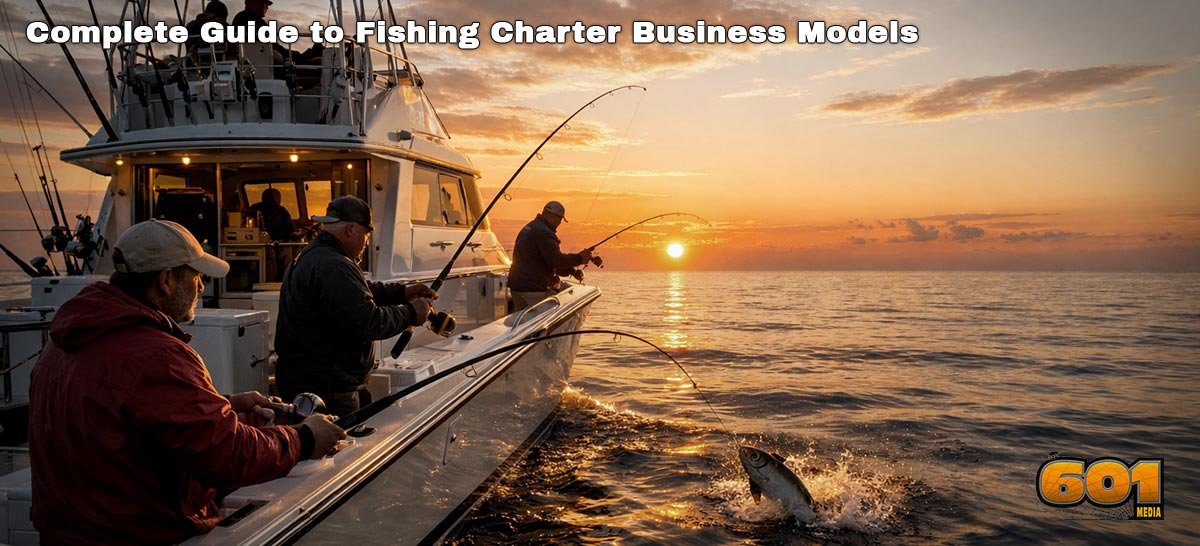
Complete Guide to Fishing Charter Business Models: Full-Day, Half-Day, Specialty & Luxury Explained
Fishing charter businesses are not one-size-fits-all operations. The business model you choose directly impacts revenue, operating costs, marketing strategy, customer demographics, and long-term scalability. Selecting the right model is one of the most critical decisions for any charter captain or outdoor guide. Todays guide breaks down the four most successful fishing charter business models in the industry: full-day, half-day, specialty, and luxury charters. Each model is examined through a commercial lens, helping you understand profitability, demand, operational complexity, and growth potential. This article also connects strategically to How to Start & Market a Fishing Charter & Outdoor Guide Business by framing each model within a larger business-building roadmap.
Table of Contents
- Overview of Fishing Charter Business Models
- Half-Day Fishing Charters
- Full-Day Fishing Charters
- Specialty Fishing Charters
- Luxury and Premium Fishing Charters
- Business Model Comparison
- How to Choose the Right Model
- Scaling and Diversifying Revenue
- Top 5 Frequently Asked Questions
- Final Thoughts
- Resources
Overview of Fishing Charter Business Models
A fishing charter business model defines how trips are structured, priced, marketed, and delivered. The most successful operators align their model with local fishing conditions, customer demand, seasonal trends, and personal lifestyle goals. Industry data shows that charter businesses with clearly defined offerings generate up to 35 percent higher repeat bookings than operators offering vague or overly broad services. Customers want clarity, specialization, and predictable value.
Half-Day Fishing Charters
Half-day charters are typically four to six hours long and represent the entry point for most recreational anglers. These trips are popular in tourist-heavy regions and family-oriented coastal towns. Revenue per trip is lower compared to longer outings, but half-day charters benefit from higher booking volume and faster turnaround. Many operators run two half-day trips per day during peak season, effectively doubling daily revenue potential. Operational costs are lower due to reduced fuel consumption, less bait usage, and minimal crew fatigue. This model is ideal for new charter operators testing market demand or captains seeking predictable schedules.
Full-Day Fishing Charters
Full-day charters typically run eight to ten hours and attract serious anglers targeting larger or offshore species. These trips command higher prices and often include advanced techniques such as trolling, deep dropping, or reef hopping. From a business standpoint, full-day charters generate higher margins per trip but come with increased fuel costs, equipment wear, and crew demands. However, customer satisfaction tends to be higher due to longer fishing time and better catch potential. Operators running full-day charters often build strong reputations within angling communities, leading to referrals, repeat clients, and premium upsell opportunities.
Specialty Fishing Charters
Specialty charters focus on a specific niche such as fly fishing, shark fishing, deep-sea expeditions, night fishing, or tournament prep trips. These models thrive on expertise and differentiation rather than volume. Pricing is typically premium, reflecting specialized gear, advanced knowledge, and targeted outcomes. Customers booking specialty charters are often highly motivated and willing to pay for results. This model requires deep technical skill, but it offers strong brand positioning and lower competition. Specialty operators frequently leverage content marketing, social proof, and educational messaging to attract ideal clients.
Luxury and Premium Fishing Charters
Luxury fishing charters blend angling with hospitality. These trips emphasize comfort, exclusivity, and personalized service, often including gourmet meals, premium beverages, climate-controlled cabins, and concierge-style experiences. Pricing is significantly higher, but so are expectations. Luxury charters attract corporate clients, high-net-worth individuals, and destination travelers. Profitability depends on brand perception, service consistency, and strategic partnerships with resorts or tourism agencies. This model requires higher upfront investment but delivers the strongest long-term scalability when executed correctly.
Fishing Charter Business Model Comparison
Half-day charters prioritize volume and accessibility. Full-day charters focus on experience depth and angler satisfaction. Specialty charters monetize expertise and niche demand. Luxury charters sell exclusivity and premium service. There is no universally superior model. The most profitable operators often combine two or more models to balance cash flow, seasonality, and customer segmentation.
How to Choose the Right Fishing Charter Business Model
Choosing the right model depends on location, target audience, capital availability, and personal goals. Coastal tourism hubs favor half-day and luxury trips, while remote or trophy fisheries perform better with full-day or specialty charters. Operators should analyze fuel costs, seasonal demand, competition density, and regulatory requirements before committing. Aligning your model with your marketing strategy is essential, which is covered in detail in How to Start & Market a Fishing Charter & Outdoor Guide Business.
Scaling and Diversifying Revenue
Once a primary model is established, scaling becomes easier through add-ons such as merchandise, photography packages, instructional clinics, and multi-day packages. Diversification reduces risk and increases lifetime customer value. Many successful charter businesses evolve into full outdoor brands by expanding into guiding, digital education, sponsorships, and content-driven marketing.
Top 5 Frequently Asked Questions
Final Thoughts
The fishing charter business is as much about strategy as it is about fishing skill. Choosing the right business model shapes everything from daily operations to long-term brand value. Operators who understand their market, define their offering clearly, and align their services with customer expectations consistently outperform competitors. Whether you focus on volume, expertise, or luxury, success comes from clarity, execution, and smart positioning.
Resources
- NOAA Fisheries – Commercial and Recreational Fishing Data
- U.S. Coast Guard Charter Vessel Regulations
- IBISWorld – Recreational Fishing Industry Reports
- Outdoor Industry Association – Participation Trends