



Top 10 Landing Page Best Practices for Fishing Charter Bookings
Fishing charter businesses operate in a high-intent, seasonal market where visitors are often ready to book immediately. This article breaks down the ten most effective landing page best practices that directly increase booking conversions for fishing charters by reducing friction, building trust, and guiding visitors toward fast decisions.
Table of Contents
- Clear Value Proposition Above the Fold
- Single Conversion Goal Per Page
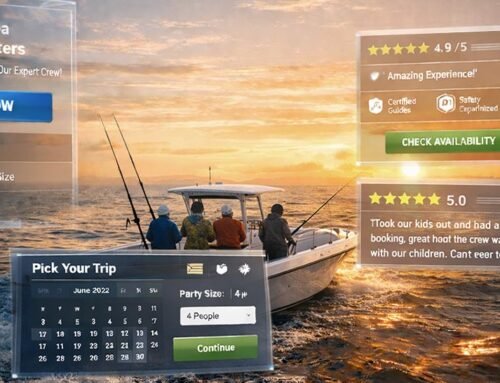
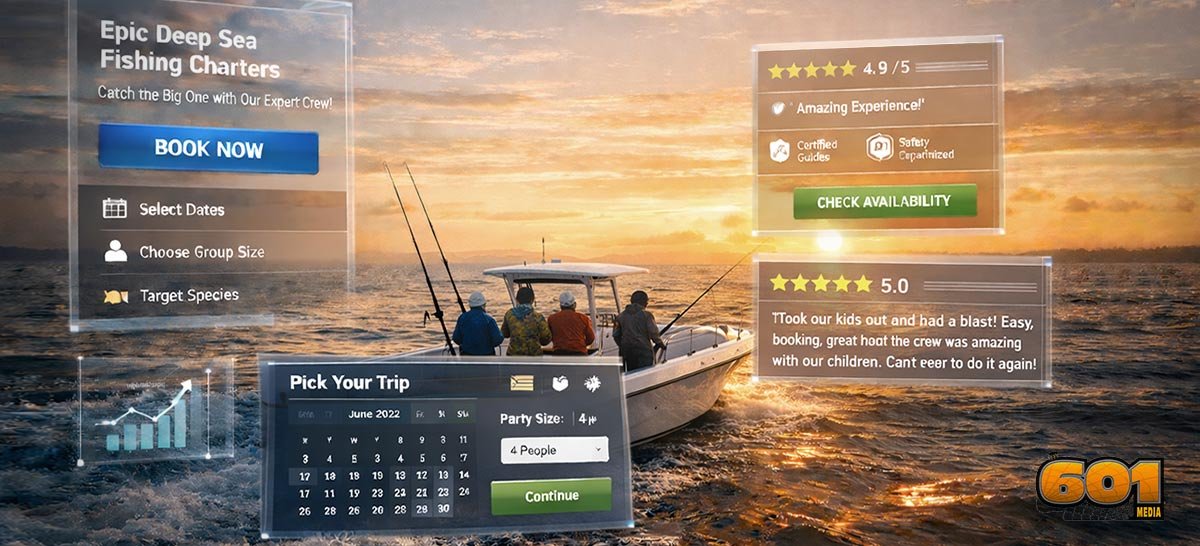
- Prominent Instant Booking Call-to-Action
- Trust Signals That Reduce Buyer Anxiety
- Visual Proof of the Experience
- Mobile-First Page Design
- Transparent Pricing and Inclusions
- Real Customer Social Proof
- Urgency Without Pressure
- Fast Load Speed and Technical Performance
- Top 5 Frequently Asked Questions
- Final Thoughts
- Resources
1. Clear Value Proposition Above the Fold
Your landing page must immediately answer three questions within five seconds: What is the experience, where does it happen, and why should someone choose you over competitors. Fishing charter visitors typically arrive with intent, not curiosity. A strong value proposition highlights location, fish species targeted, experience level, and differentiators such as private charters, licensed captains, or guaranteed catch policies.
Data from Nielsen Norman Group shows users form an impression of a page in under 50 milliseconds. If your value proposition is buried or vague, you lose bookings instantly.
2. Single Conversion Goal Per Page
High-performing charter landing pages focus on one action only: booking a trip. Avoid linking out to blogs, merchandise, or social feeds. Every secondary distraction reduces conversion probability.
Research from Unbounce shows that landing pages with a single call-to-action convert up to 266 percent better than pages with multiple competing actions. For fishing charters, this means one booking form or one “Check Availability” button repeated strategically throughout the page.
3. Prominent Instant Booking Call-to-Action
Your call-to-action must be visible without scrolling and reinforced as visitors move down the page. Phrases like “Check Availability,” “Reserve Your Charter,” or “Book Your Trip Today” outperform generic language.
Placement matters. Heatmap studies consistently show that buttons placed immediately after pricing sections and testimonials receive the highest engagement. Use contrasting colors and consistent wording across the page to reduce cognitive load.
4. Trust Signals That Reduce Buyer Anxiety
Fishing charters are experiential purchases, often involving safety concerns, weather risk, and financial commitment. Trust signals dramatically improve booking confidence.
Effective trust elements include captain credentials, years of experience, safety certifications, insurance mentions, and local affiliations. According to BrightLocal, 87 percent of consumers read online reviews for local businesses, making trust-building non-negotiable.
5. Visual Proof of the Experience
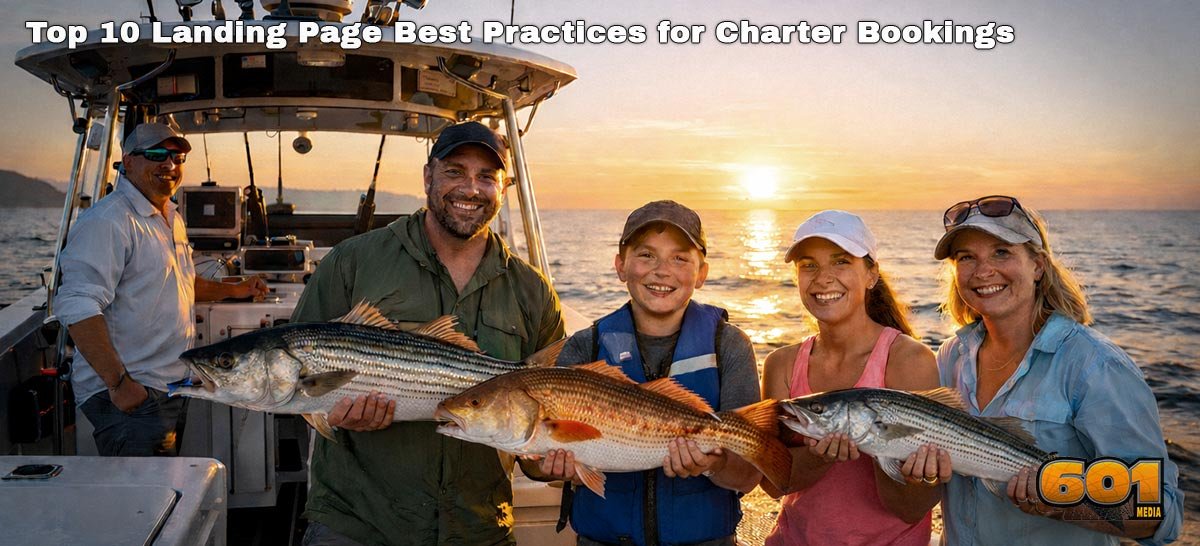
While your page must load fast, visual proof remains essential. Visitors want confirmation that the experience matches expectations. Images and videos of real customers, boats, catches, and locations create emotional buy-in.
Eye-tracking research from the Content Marketing Institute shows visuals increase information retention by up to 65 percent. Authentic, unpolished visuals often outperform stock photography because they signal realism.
6. Mobile-First Page Design
Over 60 percent of travel-related searches now happen on mobile devices. Fishing charter bookings frequently occur while travelers are already at their destination.
Mobile-first design means fast load times, large tap targets, short forms, and click-to-call functionality. Google data confirms that a one-second delay in mobile load time can reduce conversions by up to 20 percent.
7. Transparent Pricing and Inclusions
Hidden fees kill trust. Successful fishing charter landing pages clearly list what is included, such as equipment, bait, fuel, licenses, and fish cleaning.
ConversionXL research shows pricing transparency reduces abandonment rates by removing uncertainty. Even if your pricing is higher than competitors, clarity builds confidence and attracts higher-quality bookings.
8. Real Customer Social Proof
Testimonials should be specific, recent, and relevant. Generic praise is ignored. The strongest testimonials mention the type of trip, fish caught, captain name, or group type.
Including review snippets from Google or TripAdvisor increases perceived legitimacy. Spiegel Research Center found that displaying reviews can increase conversion rates by up to 270 percent for high-consideration purchases.
9. Urgency Without Pressure
Urgency works when it reflects reality. Seasonal availability, limited charter slots, or weather-dependent windows create natural urgency.
Booking software that shows limited availability or upcoming fully booked dates improves conversions without feeling manipulative. Ethical urgency aligns with the real constraints of charter operations.
10. Fast Load Speed and Technical Performance
Technical performance is invisible when done right and catastrophic when ignored. Page speed directly impacts both SEO and conversions.
Google reports that pages loading within two seconds have significantly higher engagement and booking rates. Compress assets, limit scripts, and use reliable hosting to ensure performance during peak seasons.
Top 5 Frequently Asked Questions
Final Thoughts
The most important takeaway is that fishing charter landing pages must remove friction, not add information overload. Every element should move the visitor closer to booking by answering questions, building trust, and simplifying decisions. When landing pages are designed with intent-focused structure and real customer psychology in mind, they become predictable revenue assets rather than digital brochures.
Resources
- Nielsen Norman Group – User Attention and Page Design
- Unbounce Conversion Benchmark Reports
- BrightLocal Local Consumer Review Survey
- Google Mobile Speed Impact Studies
- Spiegel Research Center Review Impact Study