

Leveraging eZine Marketing to Grow Your Client List
A practical, data-backed guide explaining how businesses can use eZine marketing as a scalable, permission-based growth channel to consistently attract, nurture, and convert high-quality clients.
Table of Contents
- What eZine Marketing Really Is
- Why eZine Marketing Still Works Today
- How to Build a High-Converting eZine
- Creating Content That Attracts Clients
- Growing and Segmenting Your Subscriber List
- Turning Subscribers Into Paying Clients
- Measuring Performance and Optimization
- Common eZine Marketing Mistakes to Avoid
- Top 5 Frequently Asked Questions
- Final Thoughts
- Resources
What eZine Marketing Really Is
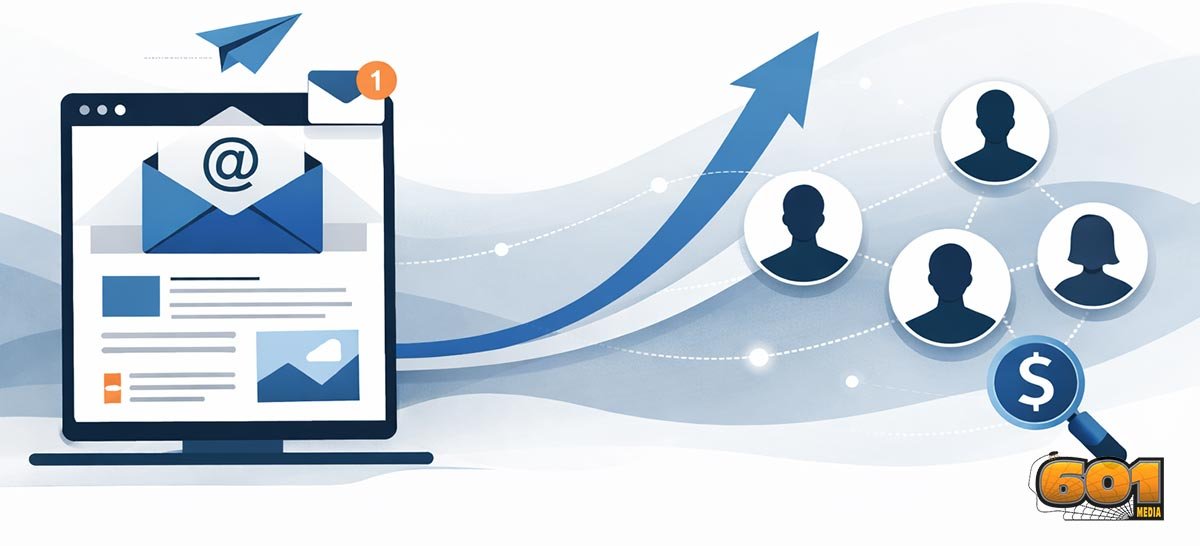
eZine marketing is the strategic use of digital newsletters to deliver valuable, niche-focused content directly to subscribers who have explicitly opted in. Unlike broadcast advertising, eZines are built on permission, consistency, and trust. This model allows businesses to communicate with prospects repeatedly without competing for attention on crowded social platforms or search results. At its core, an eZine is not a sales flyer. It is a relationship asset. When executed properly, it becomes an owned media channel that compounds in value over time.
Why eZine Marketing Still Works Today
Despite the rise of social media and AI-driven advertising, email newsletters remain one of the highest-performing digital channels. According to multiple industry studies, email marketing consistently delivers an average return of $36–$42 for every dollar spent. eZines work because they operate in a low-noise environment. The inbox is personal. Readers choose what they receive, and that choice signals intent. This makes eZine subscribers significantly more likely to convert than social followers or cold traffic. From an innovation management perspective, eZines represent a stable, low-risk growth asset that is not subject to algorithm volatility or platform dependency.
How to Build a High-Converting eZine
A high-performing eZine starts with clarity of purpose. Businesses must define exactly who the newsletter is for and what problem it solves. Generic newsletters fail because they lack strategic positioning.
Effective eZines share three structural characteristics:
- Clear editorial focus centered on a single audience pain point
- Consistent publishing cadence that trains reader expectations
- A recognizable voice that reinforces brand authority
Technology selection also matters. Email platforms with automation, segmentation, and analytics capabilities allow marketers to personalize content and scale engagement without increasing operational complexity.
Creating Content That Attracts Clients
Content is the primary growth lever in eZine marketing. The goal is not volume, but relevance. Each issue should move subscribers one step closer to trust and decision readiness.
High-performing eZine content typically falls into four categories:
- Educational insights that solve real problems
- Industry analysis that demonstrates expertise
- Case examples that show outcomes without aggressive selling
- Actionable frameworks readers can apply immediately
From a technology management lens, this content functions as demand education, reducing friction in the buying process before a sales conversation ever occurs.
Growing and Segmenting Your Subscriber List
Subscriber growth should be intentional, not accidental. The most effective eZine lists are built using targeted lead magnets aligned with the core service offering.
Examples include:
- In-depth guides
- Diagnostic tools
- Exclusive industry reports
- Educational email courses
Segmentation is equally important. Grouping subscribers by interest, behavior, or lifecycle stage allows businesses to deliver more relevant messaging and significantly improve conversion rates.
Turning Subscribers Into Paying Clients
Monetization happens when value delivery precedes the offer. Successful eZine marketers introduce services through contextual relevance rather than direct promotion.
Effective conversion techniques include:
- Soft calls-to-action embedded within educational content
- Invitations to webinars or consultations
- Problem-focused case breakdowns linked to services
- Exclusive subscriber-only offers
This approach aligns with trust-based selling models and dramatically shortens the sales cycle.
Measuring Performance and Optimization
Key performance indicators for eZine marketing include open rates, click-through rates, subscriber growth, and conversion attribution. However, advanced practitioners also track engagement depth and revenue per subscriber. Continuous optimization should focus on subject line testing, content sequencing, and behavioral triggers. Small iterative improvements compound over time, turning an average eZine into a high-performing client acquisition system.
Common eZine Marketing Mistakes to Avoid
The most common failure points include inconsistent publishing, over-promotion, poor targeting, and lack of strategic intent. Many businesses treat eZines as announcements rather than as a value engine. From an innovation management standpoint, this reflects a misalignment between technology capability and strategic execution.
Top 5 Frequently Asked Questions
Final Thoughts
eZine marketing remains one of the most underutilized yet powerful tools for sustainable client growth. When positioned as a long-term relationship platform rather than a promotional channel, it delivers compounding returns, deeper trust, and predictable demand generation. Organizations that invest in strategic content, intelligent segmentation, and continuous optimization will outperform competitors chasing short-term visibility on volatile platforms.